Skip to content

Paradox Development · Solutions architecture & software

We use technology to get the technology out of the way.

doxDev designs, builds, and documents the systems small and mid-size teams run on: workflow automation, custom software, data foundations, and practical AI. We work in any industry, and we build it to be yours.

Where we've worked:
  • Publishing
  • Hospitality
  • Spirits & brand representation
  • Financial services
  • and wherever the work is manual

Why doxDev

Smart people shouldn't spend their days doing pointless work.

Most teams don't have a technology problem. They have a pile of tools that don't talk to each other, processes that live in one person's head, and hours lost every week to copy-paste, re-keying, and chasing status.

We started Paradox Development because we couldn't stand watching capable people do busywork just because “we've always done it that way.” Our job is to find where the friction compounds, design something better, and build it so it keeps working after we leave.

Patterns we fix

  • Manual work that should be structured or automated
  • Processes that live in tribal knowledge, where everything breaks when one person is out
  • Five SaaS subscriptions doing one job badly, with a human acting as the API between them
  • Reporting that takes more effort to maintain than it saves
  • Tools that technically work but that nobody wants to use
  • Documentation that exists but doesn't help anyone do the work

Services

Architecture first. Then we build it.

We're strongest at seeing how the pieces connect, and we don't stop at the diagram. Most engagements combine a few of these.

Solutions architecture & fractional CTO

A technical lead who maps how your business actually runs and designs the systems to support it, without a full-time hire.

  • System audits and “current state vs. target state” maps
  • Tool consolidation: which subscriptions to keep, replace, or retire
  • Build vs. buy decisions, vendor evaluation, and technical roadmaps
  • An ongoing technical partner for owners who don't want to become technologists

Workflow automation & integration

Your tools talk to each other, and nobody re-keys the same data three times.

  • Form → document → file → notification pipelines
  • CRM, project management, and chat integrations
  • Scheduled monitoring and alerting that runs nights and weekends
  • Centralized error logging, so automations don't fail silently

Tools we often use

  • n8n
  • Power Automate
  • Zapier
  • Airtable
  • REST APIs & webhooks
  • Google Workspace
  • Microsoft 365

Custom software, from low-code to full-code

When off-the-shelf doesn't fit, we build what does, at the right weight for the problem.

  • Internal tools and operations dashboards
  • Customer-facing web apps and installable PWAs
  • Multi-tenant SaaS and white-label deployments
  • Low-code (Power Apps, Airtable interfaces) when that's the better answer

Tools we often use

  • TypeScript
  • React / Next.js
  • Python / FastAPI
  • PostgreSQL / MySQL
  • Docker
  • Railway

Data foundations: a single source of truth

One place where your operational data lives, stays clean, and can be reported on and queried.

  • Schema design and data consolidation from scattered tools
  • Sync pipelines, backups, and audit trails
  • No-code data UIs so non-technical staff can work with the data safely
  • Structured data that's ready for reporting and AI

Practical AI: assistants, agents, and team tooling

AI that is part of a governed system, not decoration.

  • Custom AI assistants tuned to your team's voice, rules, and tools
  • Claude Code / Cowork plugin bundles and MCP integrations, delivered per client and maintained centrally
  • AI-assisted research and enrichment pipelines with human-checkable output
  • Clear data rules: client data never goes into an AI tool unless it's explicitly approved

Sites & internal tools your team can run themselves

Fast, clean websites and simple tools your team updates in plain English, with no developer in the loop for routine changes.

  • Marketing and author sites, edited by talking to Claude
  • Guardrails so edits can't take the site offline
  • Event hubs, landing pages, and scheduling pages

Approach

Shipping is good. Stabilizing is better.

Every engagement follows the same arc, scaled to the size of the problem.

Steps

  1. Step 1: Map

    We start by mapping friction honestly: where work stalls, duplicates, or depends on one person.

  2. Step 2: Design

    We define the target state, what to keep, what to replace, and what “done” looks like, then agree on it before building.

  3. Step 3: Build

    We build in small, working increments, so you're using real pieces early instead of waiting for a big reveal.

  4. Step 4: Document & hand off

    We write documentation for the next operator: SOPs, runbooks, and naming that makes sense.

  5. Step 5: Stabilize

    We stay through the edge cases until the new way holds under normal use.

Principles

  • You own it.

    Your accounts, your data, your code. If we part ways, you walk away with everything and nothing to untangle.

  • Systems should survive their builder.

    If only one person understands it, it isn't finished.

  • If people can't use it, it isn't done.

    Adoption is part of the job, not an afterthought.

  • No black boxes.

    Every automation logs what it did, and failures are loud, not silent.

  • Careful with AI and data.

    We use AI deliberately and keep client data out of AI tools unless it's explicitly safe and approved.

  • The toolset compounds.

    What we build for one client becomes a hardened, reusable building block for the next, so you benefit from every engagement before yours.

Ways to engage

  • Project

    A defined problem, scope, and finish line.

  • Fractional / retained

    An ongoing architect and builder on call.

  • Advisory session

    A working session to map your systems and leave with a plan.

Industries

Industry-agnostic, because friction is.

Every industry thinks its mess is unique. The patterns underneath are remarkably consistent: disconnected tools, manual handoffs, knowledge trapped in people's heads. Here's where we've done the work.

  • Publishing

    Active work

    Automation backbones, campaign monitoring, AI assistants, and self-service sites for independent publishers and their authors.

  • Hospitality & breweries

    Product

    Local Link Leagues runs community game leagues at a Minneapolis brewery, tied into the venue's Square loyalty program.

  • Spirits & brand representation

    Product

    Event scheduling, multi-brand approvals, and split billing for brand reps (RePourT), plus event hubs for a craft distillery.

  • Financial services

    Background

    Enterprise automation, low-code tooling, documentation standards, and data governance at a Fortune 500 financial firm.

The patterns transfer.

The same playbook fits law firms, financial advisors, dealerships, agencies, nonprofits, and any team where good people spend too much time on the work around the work. If you're not sure you're a fit, ask. We'll tell you honestly.

Work

Real systems, real outcomes.

A few examples. Numbers come from the before/after impact reports we deliver to clients.

Client: an independent book publisher

An automation backbone for an independent publisher

A growing publisher running on disconnected tools, manual project setup, paid form and monitoring services, and hours of weekend campaign checking.

staff hours returned per year
~700–900
project setup
30–40 min → <3 min
  • n8n
  • Airtable
  • Teamwork API
  • Dropbox
  • Google Workspace
  • Google Chat
Client: an independent publisherDesigned · rollout underway

A single source of truth for operations

Operational data spread across six external systems, with no reliable place to report or ask questions.

data sources consolidated
6 → 1
containers, on a private network
9
  • Docker Compose
  • MariaDB
  • NocoDB
  • Caddy
  • Tailscale
  • MCP
Client: a publishing team

An AI assistant with the team's values built in

The team wanted AI help managing authors and opportunities, but consistent with how they work: honest about scope and cost, and protective of author rights.

A repeatable pattern for giving a team AI that behaves like part of the team.

  • Claude
  • Cowork / Claude Code plugins
  • CRM API
  • Google Chat
Client: independent publishers and authors

Websites clients edit by talking to Claude

Small publishers and authors need to update their sites often, but can't justify a developer for every change.

Routine site changes with no developer in the loop, and clients who own their sites outright.

  • Static HTML/CSS
  • GitHub Pages
  • GitHub Actions
  • Claude Code plugins
Founder background

Before doxDev: enterprise automation at scale

Founder background: systems and automation lead at a Fortune 500 financial services firm (Ameriprise Financial) before founding doxDev.

saved in three months by a share-drive migration tool
$100K+
  • Power Apps
  • Power Automate

Products

We build and run our own software, too.

Building our own products keeps our client work honest. We live with our architecture decisions, and we bring what we learn to every engagement.

RePourT

Early development

Event management for spirits brand representation.

About

A small studio with an architect's habits.

A note from the founder

I'm hospitality-raised, FinTech-scarred, and process-obsessed. After years leading automation and systems work inside a Fortune 500 financial firm, I left to do this full-time: design and build the systems that let small teams stop fighting their tools and get back to the work that matters.

I'm at my best seeing how the pieces connect, then making sure what we build is documented, owned by the client, and still working a year later. I care about the people who have to live inside the system as much as the architecture underneath it.

— Aaron Albee, Founder & Solutions Architect
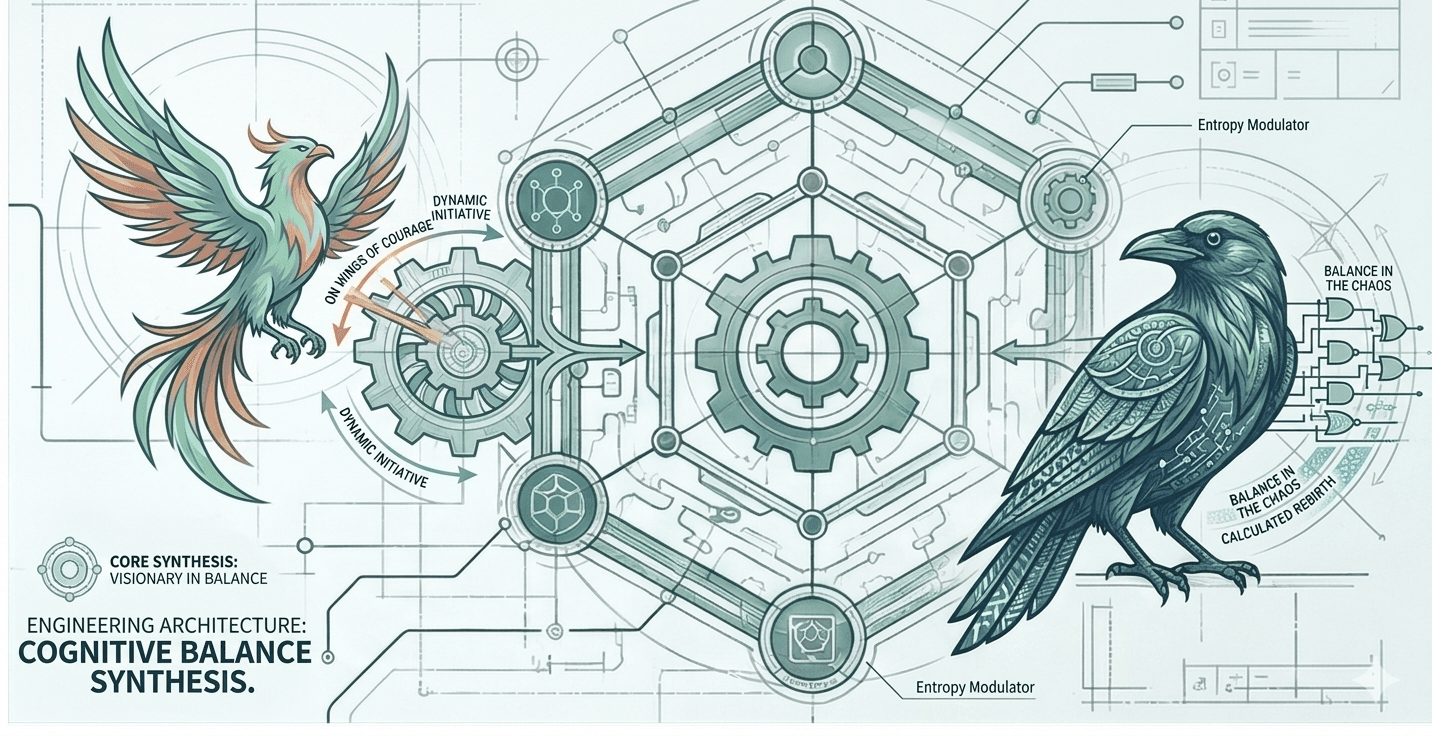
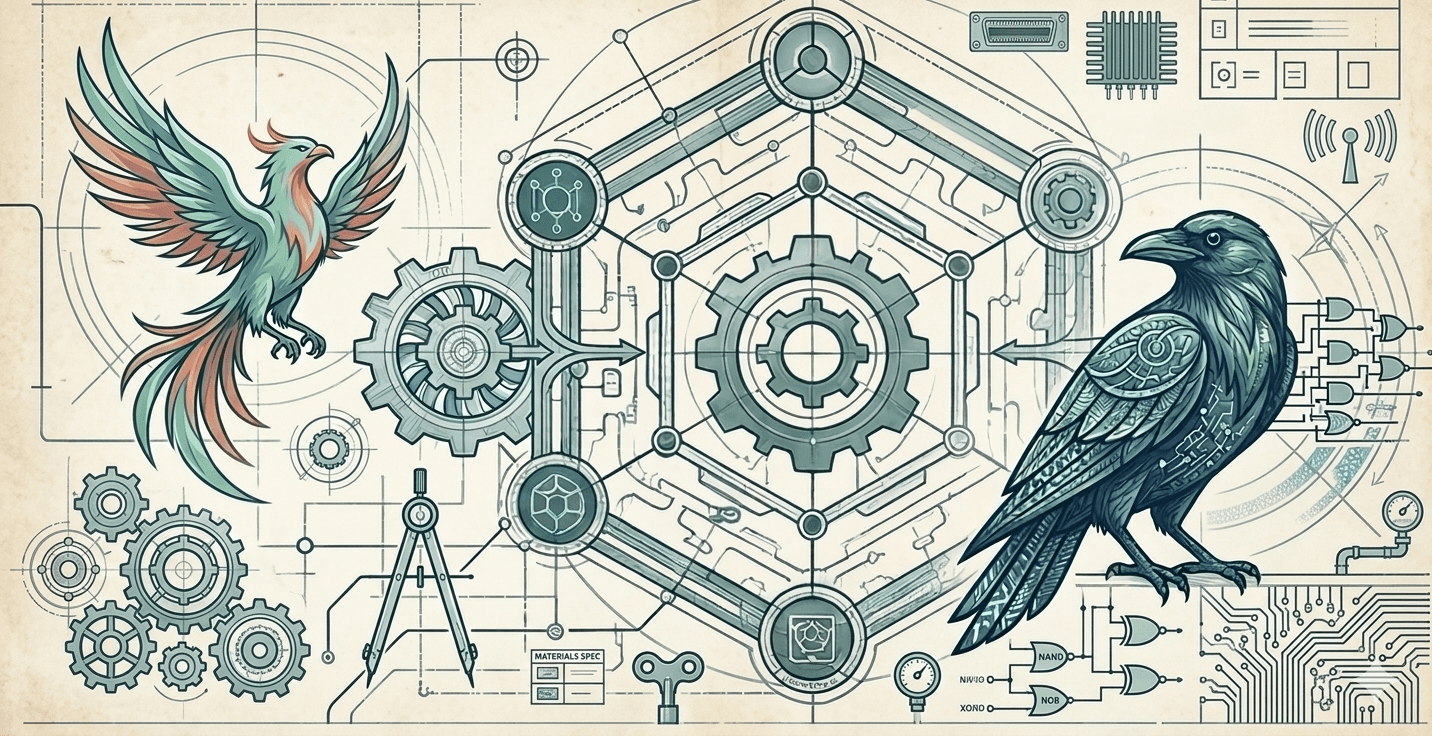
Blueprint illustration of a phoenix and a raven on either side of an interlocking system of gears.

The Paradox idea

Our brand art pairs a phoenix and a raven. The phoenix is courage: willingness to tear down what isn't working and rebuild. The raven is balance: order in the chaos. Good systems work needs both, and that tension is the paradox in Paradox Development.

Contact

Tell us what's slowing you down.

A short note is plenty. It helps if you include:

  • What's eating your team's time right now
  • The tools you're already using
  • What “better” would look like six months from now

We'll reply with honest thoughts on whether and how we can help, even if the answer is “you don't need us for this.”